A visual story
ME/CFS
An illness you can't see,
told through a body that can't keep up.
This site blends lived experience, visual storytelling, and scientific research to tell the truth about Myalgic Encephalomyelitis / Chronic Fatigue Syndrome — an illness that is real, disabling, and still largely unknown.
17–24M
people worldwide live with ME/CFS
75%
of patients report being dismissed or disbelieved by a doctor
No cure
only symptom management — no treatment targets the underlying disease
Educational content only. Not medical advice. Speak with a clinician for personal guidance.

A note before you begin
Who This Is For
If you have ME/CFS, you may have spent years looking for something that explains your experience without asking you to defend it first. If someone you love has it, you may be trying to understand something the medical system failed to explain to them.
Either way — you're in the right place.
ME/CFS is one of the most disabling conditions documented by medicine. Quality-of-life scores consistently fall below those of patients with heart failure, multiple sclerosis, and end-stage kidney disease. Up to a quarter of patients are housebound or bedbound. Most never fully recover. This is not widely understood — which is part of the problem.
This site moves through the illness in chapters: the body, the medical system, the life that forms around it, and what it means to keep going inside severe constraints. It draws on patient accounts and published research. It doesn't soften things.
My name is Luke. I'm based in Sydney, and I've had this illness for thirteen years. ME/CFS has slowly stripped back my ability to do the things I once built my life around. Most days are spent managing energy, pain, and the consequences of pushing too far.
This project comes from that place. It's an attempt to translate something invisible into something that can be felt — because explaining it hasn't been enough.
Includes accounts of medical trauma, grief, and systemic failure. Take it at your own pace.
What it actually is
Common Symptoms
ME/CFS is a multi-system illness. Symptoms span neurology, immunity, sleep, autonomic function, and more. Select any symptom to explore what it involves.
Post-Exertional Malaise
PEM
Any physical, mental, or emotional exertion triggers a worsening of all symptoms — typically delayed 12–48 hours. The collapse can last days, weeks, or cause permanent setbacks. PEM is the criterion that most distinguishes ME/CFS from other conditions.
“I pushed through a short walk on a good day. Three days later I couldn't sit up. PEM isn't tiredness — it's a system shutdown.”
Key characteristics
- ›Onset delayed 12–48 hours after exertion
- ›Triggered by physical, cognitive, and emotional effort
- ›Can cause lasting functional decline, not just temporary symptoms
Prevalence estimates are approximations drawn from clinical research. Individual presentation varies widely — no two cases of ME/CFS are identical.

How it begins
The Trigger
ME/CFS does not appear from nowhere. In most cases, something precedes it — an identifiable event after which the person never quite returned to who they were before. They recovered from the infection, or the trauma, or the surgery. And then they didn't. Not fully. Not in the way they expected.
The most common trigger is a viral infection. The body fights it. The immune system responds. For most people, that response resolves and life resumes. For a subset, something goes wrong in the resolution — the immune system does not fully stand down, the nervous system remains in a state of dysregulation, and the illness takes hold.
Known triggers
Viral infections
The most common precipitant. Epstein-Barr virus (glandular fever / mono), enteroviruses, influenza, SARS-CoV-2, and others have all been documented as triggers. The virus does not need to be severe — a mild infection can be enough.
COVID-19 (Long COVID)
An estimated 10–30% of COVID-19 infections result in persistent symptoms. A significant proportion meet diagnostic criteria for ME/CFS. Long COVID has brought renewed attention and research funding to the entire field.
Bacterial and parasitic infections
Lyme disease, Q fever, and other bacterial infections have been documented as triggers in a subset of cases, particularly where the infection is poorly treated or diagnosed late.
Physical trauma
Surgery, accidents, or significant physical injury can act as a trigger in predisposed individuals — particularly where the recovery period involves immune activation and prolonged physical stress.
Psychological and emotional trauma
Severe or prolonged stress, bereavement, abuse, and childhood trauma have been identified as risk factors and triggers. This is not evidence that ME/CFS is psychological — trauma has measurable effects on immune function and the autonomic nervous system.
Gradual onset
In some cases there is no single identifiable trigger. The illness accumulates slowly, often over months or years, before crossing a threshold that demands recognition.
The existence of a trigger does not explain why some people develop ME/CFS and most do not. Millions of people have had glandular fever. Most recovered. The difference likely lies in a combination of genetic predisposition, immune response patterns, the timing and severity of the triggering event, and factors not yet fully understood. Research into why the immune system fails to reset is ongoing — and Long COVID has given it urgent new momentum.
One important clarification: the role of psychological trauma as a trigger is not the same as the illness being psychological in cause. Trauma alters immune regulation, hypothalamic-pituitary-adrenal axis function, and autonomic nervous system responses in ways that are measurable and biological. A traumatic trigger leads to a biological illness. This distinction matters — because conflating the two has been used, incorrectly, to dismiss ME/CFS as a mental health condition rather than the systemic physiological disease it is.

The energy problem
A Broken Battery
In ME/CFS, the body does not produce or sustain energy the way a healthy body does. Every activity — physical, cognitive, emotional — draws from a limited reserve that does not replenish overnight.
This is called exertion intolerance. Not laziness. Not deconditioning. The cells themselves are impaired. Research shows distinct metabolic abnormalities in ME/CFS — the mitochondria, the energy currency of the body, do not function normally.
Pacing is the practice of staying within the energy envelope — the available daily energy budget — to avoid triggering crashes. Not pushing. Not giving up. Calculating.
The battery drains. Sometimes it barely charges overnight. Some days, a shower is all the day can hold.
Sleep does not restore it. This is one of the most disorienting features of ME/CFS — waking up already depleted, before the day has asked anything of you. The body runs through the night but does not charge. Unrefreshing sleep is not poor quality sleep in the ordinary sense. It is a failure of the restoration process itself. The battery runs, and runs, and wakes empty.
What surprises most people is that physical, cognitive, and emotional exertion all draw from the same pool. There is no separate reserve for thinking, for feeling, for talking. Resting the body while reading is not rest — it is a different kind of withdrawal from the same account. A difficult conversation costs as much as a difficult walk. Excitement, anxiety, concentration, grief — all of it runs the same battery down.
Even on the best days, the starting charge is already damaged. A healthy person begins the day at 100%. A person with ME/CFS may begin at 20 or 30 — not because they have used anything yet, but because the upper limit of the battery itself is broken. That ceiling is not something rest can raise. It is the new capacity. Everything must fit inside it.
Exceeding that limit does not simply cost tomorrow. It can cost weeks, and sometimes more. Repeated overdrafts can permanently shrink the battery's capacity — each crash leaving a lower baseline than the one before. This is the mechanism behind long-term deterioration in ME/CFS: not a dramatic single event, but the slow erosion of a limit that was already too small, worn down further by every time it had no choice but to be exceeded.
And the discharge rate is not stable. What costs 10% on a better day can cost 40% on a worse one, for no reason that can be predicted or explained. Mid-sentence, mid-task, the power simply cuts. A patient cannot budget reliably because the budget itself changes daily — sometimes hourly — without warning. This is not weakness or inconsistency. It is what a broken battery does.
Post-exertional malaise
The Crash
Post-exertional malaise — PEM — is not being tired after exercise. It is the body collapsing. A worsening of all symptoms following exertion that would be unremarkable for a healthy person.
The crash may not arrive immediately. It often appears 12 to 48 hours later — making it easy to miss the connection between action and consequence. A good day becomes two lost days.
Two-day cardiopulmonary exercise testing (CPET) has demonstrated this objectively: ME/CFS patients show significantly reduced exercise capacity on the second test — unlike healthy controls. The crash is measurable. It is physiological.
What can trigger a crash
These are not extreme activities. For someone with ME/CFS, any of these can be enough.
A shower
The physical and cognitive effort of standing, washing, and regulating temperature is significant.
A short walk
Even 5–10 minutes of walking can exceed the energy envelope and trigger PEM hours later.
A phone call
Sustained conversation requires cognitive effort. Social exertion counts the same as physical exertion.
Reading or screen time
30–60 minutes of focused attention can be enough. Mental effort draws from the same depleted pool.
A doctor's appointment
The combination of travel, waiting, talking, and emotional effort is one of the most common crash triggers.
Mild stress or excitement
Good news, bad news, anticipation — emotional exertion follows the same rules.
During a crash: light becomes painful. Sound becomes unbearable. Words dissolve before they can form. The body refuses instruction. Limbs feel weighted. Skin can hurt to touch. Temperature regulation fails. Nausea arrives without warning. The floor between the bed and the bathroom becomes a distance that requires planning. A crash can last hours. Or days. Or weeks. Severe crashes can cause lasting deterioration.
Living with PEM means running a constant, invisible calculation. Every activity has a cost. Every cost must be weighed against what else needs to happen that day, that week. Patients learn to ration: a shower or a phone call, but not both. A short walk or cooking dinner, but not both. Miss the calculation once — stay up an hour too late, accept one visitor too many — and the debt is paid over days, not hours. There is no overdraft facility.
The hardest part for many patients is not the crash itself — it is the anticipation. Every decision becomes a risk assessment. Joy has a price. Celebration has a price. Saying yes to something you want carries the knowledge of what you will lose afterwards. Over time, many patients stop saying yes at all — not because they want to, but because the cost has become too familiar to forget.
The push-crash cycle — and why it matters
A single crash is serious. What makes ME/CFS particularly dangerous is what happens when crashes repeat. The pattern looks like this:
A relatively better period
Energy feels slightly higher. The person does more — catches up on neglected tasks, attends something they have been missing, simply lives a little closer to normal. This feels reasonable. It is, often, unavoidable.
The crash follows
12–48 hours later, sometimes more. Symptoms worsen across every system. The body is in debt. The period of activity has been paid for.
Partial recovery
After days or weeks, the person stabilises — but not always back to where they were before. The floor has dropped slightly.
The cycle repeats
The next good period. The next crash. Another small drop in baseline. Over months and years, this is how mild ME/CFS becomes moderate. How moderate becomes severe. Not through a single catastrophic event, but through accumulated damage from repeated boom-bust cycles.
This is why the advice to “push through” is not just unhelpful — it is actively harmful. Every push that exceeds the energy envelope carries the risk of a lower landing point. And it is why patients who appear to be managing sometimes deteriorate steadily over years despite appearing, from the outside, to be coping.

Not just tired
The Severity Spectrum
Most people picture mild fatigue. ME/CFS spans from reduced activity to complete bedbound dependence — and every level is disabling.
Mild
Reduced capacity, still mobile
Can manage some daily tasks but must rest afterwards. Part-time work or study may be possible on good days. Social life is significantly curtailed and unpredictable.
May still be possible
- ›Short outings on good days
- ›Light household tasks
- ›Part-time work (sometimes)
No longer possible
- ×Full-time anything
- ×Reliable plans
- ×Recovery that feels normal
These four levels are not fixed categories. Severity fluctuates — sometimes within a single day, sometimes across months or years. A person who manages moderate ME/CFS on a stable week can find themselves at severe after a crash, a virus, or a run of poor sleep. Apparent improvement does not mean recovery. It often means a brief window of relative stability that can be lost as quickly as it arrived. Many patients describe a baseline that drifts down over time, particularly after periods where they had no choice but to exceed their limits.
This is why the deterioration risk for mild patients is significant and often ignored. Mild ME/CFS can look like manageable fatigue — functional enough that employers, doctors, and family see no reason for major accommodation. The patient pushes on. They follow advice to exercise more, stay active, think positively. They crash. They recover partially. They push again. Each cycle can leave them at a lower baseline than before. Mild does not mean stable. It means at risk of becoming worse if the illness is not taken seriously at this stage.
Quality of life comparison
ME/CFS patients score lower on the SF-36 quality of life survey than patients with conditions most people recognise as severe and life-altering.Jason et al, Journal of Clinical Psychology in Medical Settings, 1997
Approximate SF-36 physical functioning scores. Lower = worse quality of life.
When the hospital is unreachable
The most severely affected patients cannot access the healthcare that might theoretically help them. The journey itself — the movement, the noise, the light, the waiting room — is enough to trigger a catastrophic and lasting crash. For someone at the very severe end of ME/CFS, a hospital trip is not an inconvenience. It is a medical emergency in its own right.
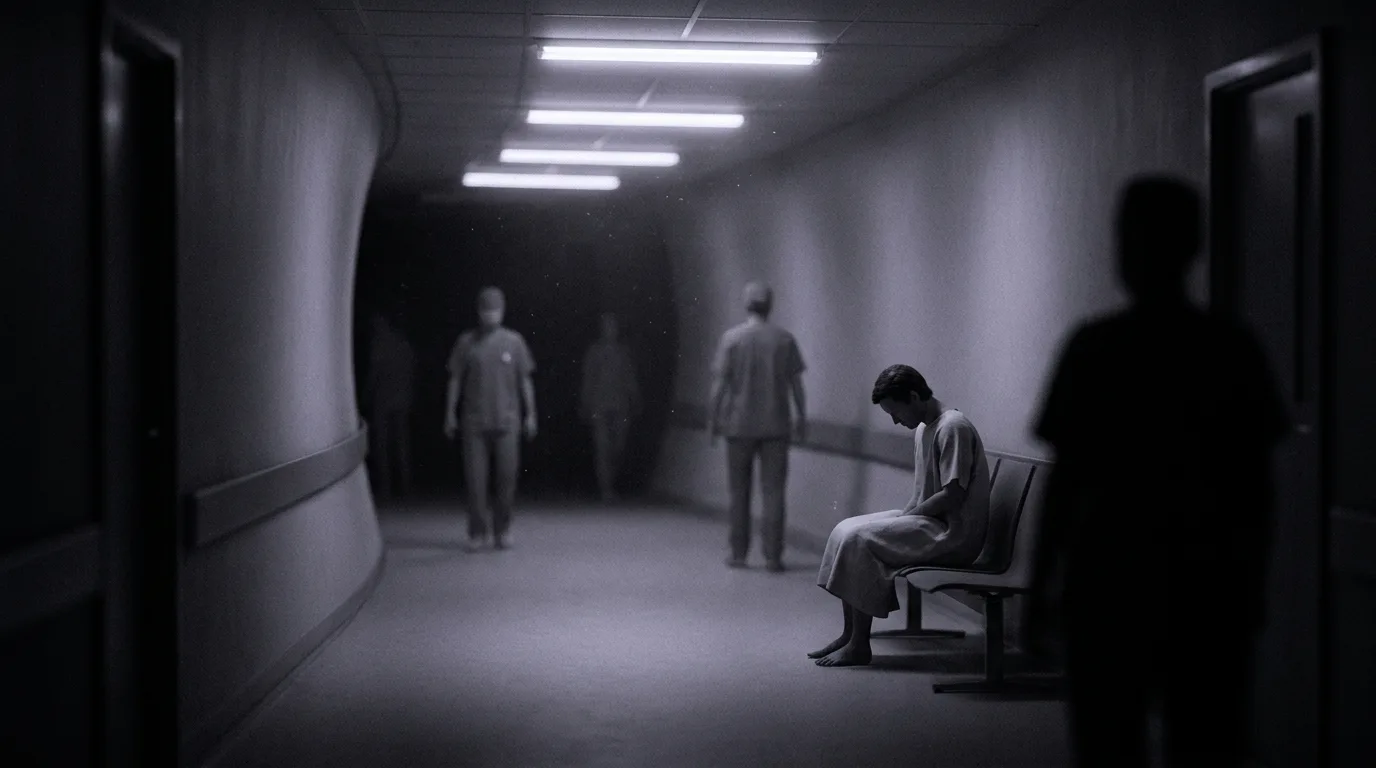
And if they do get there, the environment works against them. Bright fluorescent lights. Constant noise. Being asked to sit up, to walk to a room, to answer questions in a loud corridor. These are standard hospital procedures. For a very severe ME/CFS patient, each one can cause lasting deterioration.
Staff have no ME/CFS training
Most hospital clinicians have never been taught about ME/CFS. The protocols for severe and very severe patients do not exist in most settings.
Standard care causes harm
Being told to mobilise, to sit up, to push through — advice that is normal in almost every other context — can permanently worsen a severe ME/CFS patient's condition.
The sicker you are, the less help is available
Mild patients can attend appointments. Moderate patients sometimes can, with cost. Severe and very severe patients often cannot access any in-person care at all.
Some have been harmed by admission
There are documented cases of patients deteriorating permanently following hospital admissions where staff had no understanding of the illness and applied the wrong management model.
Sensory overload
Noise. Light. Touch.
The nervous system in ME/CFS does not regulate sensory input normally. Sounds become sharp. Light becomes pain. The texture of a blanket becomes unbearable. The body is overloaded by what others barely notice.
The brain normally filters sensory input automatically — background noise fades, the feeling of clothes against skin disappears, bright light adjusts. This filtering is called sensory gating, and in ME/CFS it fails. The nervous system can no longer dampen what it should be able to ignore. Sounds that should recede stay sharp. Light that should adjust keeps pressing in. The brain has to actively process things it should never have had to notice.
This is not discomfort. It is metabolic cost. Every piece of input that can't be filtered has to be processed — and processing, in a body with a severely restricted energy envelope, uses the same finite resource as moving does. Walking through a supermarket with fluorescent lighting, ambient music, and the sound of multiple conversations is not just unpleasant: it can trigger post-exertional malaise in the same way physical exertion does. The person lying in a darkened room is not being dramatic. They are rationing.
What depletes the nervous system
Light
Overhead fluorescent lights, sunlight through windows, screens. Even low levels can cause pain during a crash.
Sound
Background TV, music, multiple conversations, traffic. Volume matters less than persistence — a quiet hum can be as draining as a loud noise.
Touch
Clothing seams, temperature changes, unexpected physical contact. During a flare, the weight of a duvet can be too much.
Smell
Perfume, cleaning products, cooking. Chemical sensitivities are common and can trigger systemic symptoms.
Cognitive load
Following a conversation, reading, making decisions, navigating a new environment. The brain uses energy to process information, and that energy isn't available.
Social input
Reading facial expressions, managing the back-and-forth of conversation, performing wellness for others. Connection itself has a cost.
Cognitive dysfunction — sometimes called brain fog — is a core feature. Difficulty with memory, attention, word-finding, and processing speed. Neuroimaging shows real structural and functional changes in the brain.
Beyond sensory processing, the autonomic nervous system regulates everything the body does without conscious effort — heart rate, blood pressure, digestion, temperature, sleep. In ME/CFS, this system is dysregulated. The body struggles to maintain homeostasis in ways that are invisible from outside: heart rate that spikes on standing, temperature that won't stabilise, digestion that slows or fails, sleep that doesn't restore no matter how many hours are spent in bed. The effort of simply being upright — of maintaining a stable internal environment — consumes energy continuously. It is not background noise. It is a constant drain.
Orthostatic intolerance — where standing or sitting upright worsens symptoms — affects a large proportion of people with ME/CFS. POTS (Postural Orthostatic Tachycardia Syndrome) overlaps significantly. For some, the act of being vertical is itself a medical event.
Reduce stimulation
Turn off motion effects and visual noise for the whole site.

Not just one thing
What Usually Comes With It
Most people with ME/CFS do not just have ME/CFS. The illness rarely arrives alone — it tends to come alongside a cluster of other conditions that share overlapping mechanisms and compound the overall burden. This is not coincidence. These conditions share roots in immune dysfunction, autonomic dysregulation, and connective tissue vulnerability. Understanding them is part of understanding what the body is actually dealing with.
Common comorbid conditions
POTS — Postural Orthostatic Tachycardia Syndrome
Affects a significant proportion of ME/CFS patients
The heart rate spikes abnormally on standing, reducing blood flow to the brain. Symptoms include dizziness, heart pounding, cognitive clouding, and near-fainting. For many patients, being upright is itself a physiological challenge — which partly explains why lying down provides real relief rather than laziness.
Fibromyalgia
Overlaps in a significant majority of cases
Widespread musculoskeletal pain, fatigue, and heightened pain sensitivity. The two conditions are often comorbid and sometimes difficult to separate clinically — both involve central sensitisation and non-restorative sleep. Having both means the pain component is more severe and more widespread.
MCAS — Mast Cell Activation Syndrome
Increasingly recognised in ME/CFS populations
Mast cells, part of the immune system, over-activate in response to triggers — foods, chemicals, medications, temperature, stress. This can cause flushing, hives, GI symptoms, fatigue, and anaphylaxis-like reactions. In ME/CFS, it contributes to chemical sensitivities and unpredictable symptom flares that have no obvious cause.
hEDS — Hypermobile Ehlers-Danlos Syndrome
Higher rates than the general population
A connective tissue disorder causing joint hypermobility, chronic pain, and tissue fragility. It also destabilises the autonomic nervous system, which is why ME/CFS, POTS, and hEDS frequently cluster together in the same patient. The combination of loose connective tissue and autonomic dysfunction amplifies most ME/CFS symptoms.
IBS and GI disorders
Reported by the majority of patients
Irritable bowel syndrome, nausea, motility issues, and food intolerances are extremely common. The gut-brain axis is involved — autonomic dysfunction affects digestion, and immune dysregulation alters the gut microbiome. Eating itself can become a significant source of symptom worsening.
Migraine
More prevalent than in the general population
Recurrent migraine — including vestibular migraine — is common, contributing to sensory sensitivity, head pain, and cognitive disruption. The shared mechanism appears to involve central sensitisation and neuroinflammation.
Anxiety and depression
Present in a proportion of patients, as consequences
These are listed last deliberately. Anxiety and depression in ME/CFS are primarily the psychological consequence of living with a severe, disbelieved, undertreated illness — not its cause. They are real and deserve treatment. But treating them does not treat the underlying disease, and framing them as the origin of ME/CFS is both inaccurate and harmful.
A significant proportion of ME/CFS patients also meet criteria for POTS, suggesting shared autonomic nervous system pathology. The combination of ME/CFS, POTS, and MCAS — or ME/CFS, POTS, and hEDS — is recognised informally in patient communities as a cluster that frequently occurs together, and is beginning to be studied as such.
The practical consequence of comorbidity is that the total burden is much higher than any single diagnosis suggests. A patient managing ME/CFS, POTS, and fibromyalgia simultaneously is dealing with dysregulated energy, dysregulated circulation, and widespread pain at the same time — often with multiple specialists who have no shared framework for treating them together. Each condition is underfunded. Each is undertreated. Each is real.

What's in a name
The Name That Did Harm
In 1988, a US government committee sat down to name a newly catalogued condition. They chose “Chronic Fatigue Syndrome.” The name was not based on the most disabling features of the illness. It was not chosen by patients or clinicians who treated it. It was chosen because it was simple and administratively convenient. It has caused incalculable harm ever since.
The illness already had a name: Myalgic Encephalomyelitis — ME — describing muscle pain and inflammation of the brain and spinal cord. That name had been in use since the 1950s, following documented outbreaks in hospitals and communities across the UK and elsewhere. It took the illness seriously as a neurological condition. “Chronic Fatigue Syndrome” was layered over it, and in doing so, it reframed the entire clinical and public perception of what this illness is.
Why the name is a problem
It reduces a multi-system disease to a single symptom
ME/CFS involves neurological dysfunction, immune dysregulation, autonomic failure, cellular energy deficits, and profound cognitive impairment. Naming it after fatigue is like naming multiple sclerosis 'Chronic Numbness Syndrome' — accurate about one symptom, catastrophically wrong about the illness.
'Fatigue' means something different to everyone who hears it
When most people hear fatigue, they think of tiredness — something sleep fixes, something willpower overcomes. The exhaustion in ME/CFS is not tiredness. It is a different physiological state entirely. But the word gives no indication of this, and that misunderstanding has shaped decades of clinical dismissal.
It signals that the condition is trivial
Conditions named after their most disabling features — motor neurone disease, multiple sclerosis, Parkinson's — receive a different level of attention. 'Chronic Fatigue Syndrome' telegraphs a minor complaint. That perception directly shaped how much research investment and how much clinical respect the illness received.
It erased the neurological history
ME had been recognised as a neurological condition for decades before CFS replaced it. The name change did not follow new evidence that the illness was less severe — it followed institutional decisions that had more to do with administrative convenience and the growing influence of psychiatrists who were actively reframing the illness as functional.
The 2015 National Academies report confronted this directly. It proposed replacing “Chronic Fatigue Syndrome” with “Systemic Exertion Intolerance Disease” (SEID) — a name that reflects what actually disables people: a system-wide intolerance to exertion. The proposal was not widely adopted, but the reasoning was unambiguous: the existing name “trivialises this serious disease and should be retired.”
Today most patients, researchers, and advocacy organisations use ME/CFS together — acknowledging both names while the debate continues. Some prefer ME alone, as the more clinically descriptive term. The name dispute is not pedantry. It is a proxy war over a more fundamental question: is this a real, serious, physical illness? For too long, the name answered that question before anyone looked at the patient.
Real consequences of the name
Patients are routinely told 'everyone gets tired sometimes' — because the name invites exactly that comparison.
Research funding has historically been a fraction of that given to conditions with comparable disability — in part because the illness sounded minor.
Clinicians trained on the name rather than the biology formed impressions before they examined patients.
Insurance companies and disability assessors have used the name to argue the illness is functional or behavioural, denying support to severely ill people.

Life within four walls
The Invisible Room
For many with ME/CFS, home becomes their entire world. Not by choice. Not by preference. By necessity. A bedroom becomes hospital, living room, and the full circumference of a life.
Functional impairment in ME/CFS is severe — comparable to multiple sclerosis and rheumatoid arthritis. Quality of life scores fall below most other chronic conditions.
At the severe end, some patients cannot leave their beds, tolerate light or sound, or eat independently. The world contracts to the size of a mattress.
Solitary confinement is considered torture by international human rights bodies. Prisoners in isolation are given one hour outside their cell each day. Many people with severe ME/CFS have not left a single room in months. Some have not left in years. The difference is that no one sentenced them. There is no release date. There is no advocacy group holding signs outside.
The cruelty is not only physical. It is the watching. Watching seasons change through a window you cannot open. Watching your friends' lives continue on a phone screen you can only hold for minutes before your arms give out. Watching yourself become a stranger — someone who used to have plans, used to have a body that agreed to show up.
A day has its own architecture when you cannot leave it. The light changes through the curtain — that is morning, that is afternoon, that is gone. A car passes outside. Someone laughs on the street. A message arrives on the phone and sits there, something to save energy for. There are good hours and bad ones, and the distance between them is invisible to anyone not living inside it. A bad hour is not rest — it is the body refusing every input, every sound, every demand. A good hour might mean reading two paragraphs before the words stop holding together. It might mean sitting up long enough to eat something. It might mean a ten-minute conversation that costs the rest of the day.
People ask: don't you get bored? As if boredom is the problem. As if the room is the problem. The room is the only place that does not punish you for being in it.

Years without answers
The Medical Maze
The average diagnostic delay for ME/CFS is over five years. During that time, most patients are not simply undiagnosed — they are actively told their symptoms are not real. They are told to exercise more, think more positively, or see a psychiatrist. The suffering continues while the search for a cause is abandoned.
This is medical gaslighting — and it is systematic. A patient arrives with measurable dysfunction: abnormal heart rate on standing, cognitive impairment on testing, documented post-exertional collapse. They leave with a referral to therapy and a suggestion that stress is the culprit. When tests come back normal, the conclusion is not “we need better tests” — it is “nothing is wrong.”
5+years
average diagnostic delay
~17m
people affected worldwide
75%
unable to work full-time
What patients are told
"You just need to push through it."
Pushing through triggers PEM. It causes lasting harm.
"Your tests are normal — nothing is wrong."
Standard tests do not detect ME/CFS. Normal results are expected.
"This sounds like anxiety or depression."
Depression does not cause post-exertional malaise. The pattern is distinct.
"Have you tried exercise?"
Graded exercise has been shown to worsen ME/CFS and is no longer recommended.
"Everyone gets tired."
ME/CFS fatigue is not ordinary tiredness. This comparison minimises a disabling illness.
Common misdiagnoses
Depression
Does not cause post-exertional malaise or orthostatic intolerance.
Anxiety disorder
Does not explain cognitive impairment that worsens after physical or mental effort.
Fibromyalgia
Overlapping pain symptoms, but PEM and the characteristic crash pattern are absent.
Deconditioning
Exercise worsens ME/CFS. This model is not just wrong — applying it causes harm.
Psychosomatic fatigue
Fatigue is a symptom, not the defining feature. PEM is what separates ME/CFS from everything else.
Years of being disbelieved do not leave a person unchanged. Repeated dismissal by doctors — the people society designates as the arbiters of illness — teaches patients that seeking help is dangerous. Many stop going. Not because they have given up on getting better, but because each appointment costs energy they cannot spare and ends with harm they cannot afford. This is medical trauma: a recognised consequence of invalidating healthcare encounters that compounds the original illness and makes every future interaction harder.
How medical trauma shows up
Avoidance of medical settings
Many patients stop seeking care altogether. The anticipated dismissal is more certain than any help they might receive.
Self-doubt
Being told repeatedly that nothing is wrong leads patients to question their own experience. Some internalise the gaslighting.
Hypervigilance before appointments
Preparing to be disbelieved — rehearsing symptoms, bringing evidence, anticipating arguments — is itself exhausting for someone with limited energy.
Distrust after diagnosis
Even patients who eventually receive a correct diagnosis struggle to trust clinicians. The damage accumulates across every prior encounter.
Worsening from harmful advice
Patients who followed GET or push-through advice and crashed as a result carry the physical consequences of having trusted the system.
The root cause is structural: ME/CFS is barely taught in medical schools. Most GPs qualify with little or no exposure to the condition — not because they are indifferent, but because the curriculum has not kept pace with the evidence. The result is a generation of clinicians who reach for the nearest explanation (mental health, deconditioning, lifestyle) rather than one they were never given.
The 2015 National Academies report called for an urgent overhaul of how ME/CFS is taught and recognised — describing a disease whose patients had been “disbelieved, stigmatised, and blamed” by the very system that should have helped them. The diagnostic criteria have been updated. Clinical practice has changed far more slowly.
In 2021, NICE removed graded exercise therapy and CBT as recommended treatments — acknowledging that the previous guidance had caused harm. Many clinicians still follow the old model. Change in guideline text and change in consulting room behaviour are two very different things.
When care causes harm
Medical Trauma
Medical trauma is not a metaphor. It is a recognised psychological consequence of healthcare encounters that dismiss, minimise, or actively harm a patient. For people with ME/CFS, those encounters are not rare events. They are the pattern. Over years — sometimes decades — they accumulate into something that reshapes how a person relates to their own body, their own experience, and every clinician they will ever face again.
Being told repeatedly that nothing is wrong does not leave a person unchanged. Neither does being prescribed a treatment that makes you objectively worse. For years, graded exercise therapy was the standard recommended response to ME/CFS. Many patients followed that advice — in good faith, trusting the system — and crashed. Some never returned to their previous baseline.
The harm is not just psychological in origin. Chronic stress — including the ongoing stress of being disbelieved, of fighting for diagnosis, of navigating a system that does not understand the illness — dysregulates the immune and autonomic systems. The trauma does not sit alongside the physical illness. It compounds it. Each dismissed appointment, each harmful prescription, each battle to be taken seriously adds physiological cost to a body that is already at its limit.
What re-traumatisation looks like
These are not personality traits. They are rational responses to a system that has repeatedly caused harm.
Dread before appointments
Not anxiety without cause — an accurate anticipation of what has happened before. The preparation, the practiced explanations, the bracing for disbelief, all begin days in advance.
Stopping seeking care
Many patients with ME/CFS disengage from healthcare entirely. The anticipated harm outweighs the anticipated benefit. Other conditions go undiagnosed and untreated as a result.
Internalised doubt
After enough people in authority say nothing is wrong, patients begin to believe it. They second-guess symptoms, minimise pain, delay asking for help. The gaslighting becomes their own voice.
Distrust of new clinicians
Even a well-meaning, informed doctor inherits the damage done by every prior encounter. Trust that took years to destroy does not return in a single appointment.
Re-traumatisation at each encounter
A dismissive comment, a sigh, a suggestion to "try yoga" — these do not land as small frustrations. For someone carrying years of medical harm, they reopen the wound.
There is a particular cruelty in needing the system that has harmed you. ME/CFS has no cure. Management requires ongoing medical support. Patients cannot simply opt out of healthcare — they are dependent on it, even as they have learned, through experience, to fear it. This is the bind: the only path forward runs through the place that has caused the most damage.
The consequences extend beyond ME/CFS itself. A patient who has learned that doctors do not believe them is less likely to seek care for anything. Comorbidities go unmanaged. Symptoms that could be treated are not reported. The disengagement that began as self-protection becomes its own source of harm — not because the patient gave up, but because the system gave them no reason to stay.
Healing the medical relationship requires more than updated guidelines. It requires clinicians who understand the history of this illness — the years of harm done under the banner of good medicine — and who approach patients accordingly: with the awareness that trust has been broken, that the patient's caution is earned, and that rebuilding it is part of the clinical task.

A condition without an age limit
Children & Young People
ME/CFS can develop at any age. In children and adolescents it most commonly follows a viral illness — often Epstein-Barr virus, the cause of glandular fever. The illness looks similar to adult ME/CFS in its core features, but the context is different: it interrupts years that are foundational in ways that are very difficult to recover later.
Children with ME/CFS often present differently to adults — with more prominent joint pain, headaches, and sleep disturbance alongside the classic post-exertional malaise and fatigue. Because children cannot always articulate their experience, and because what they describe does not match the expected picture of illness, they are frequently misread. School non-attendance — a natural consequence of an illness that makes the school environment intolerable — is reframed as anxiety, school refusal, or emotional avoidance. The child is treated for a psychological problem they do not have, while the physiological one goes unaddressed.
What childhood onset takes
Education
Missing school for months or years means missing the academic foundation that shapes future opportunities. Many young people with ME/CFS reach adulthood without GCSEs, A-levels, or equivalent qualifications — not because of ability but because they were ill during the years those things happen.
Social development
Friendships, belonging, learning how to navigate relationships — these form in school and adolescence. Long-term illness removes a young person from that environment at the exact time it matters most.
Physical development
The years of building fitness, strength, and physical confidence are replaced by years of enforced rest and decline. Physical identities that would have been ordinary never form.
The expected future
University, career beginnings, independence — the roadmap most young people assume is waiting for them. For those who develop ME/CFS in their teens or early twenties, that roadmap changes profoundly and with little warning.
Parents of children with ME/CFS often find themselves fighting on multiple fronts simultaneously: seeking a diagnosis from sceptical clinicians, battling education authorities over attendance requirements, managing the child's illness while watching their own lives reshape around the caregiving role, and all the while being treated with suspicion — as parents who are enabling avoidance rather than managing a real illness.
Treatments have been applied to children that were already of questionable evidence in adults. The Lightning Process — a programme promoted as a cure — has been used in children as young as twelve, despite significant patient and advocacy concerns about its basis and its effects. Graded exercise, cognitive behavioural therapy framed as illness correction, and school reintegration programmes that ignore post-exertional malaise have all been delivered to young people with ME/CFS, sometimes causing lasting harm. The NICE guideline change in 2021 protects against some of this — but implementation is inconsistent and paediatric services have even less ME/CFS awareness than adult ones.
Young adults who develop ME/CFS at university or in their first years of work face a particular kind of loss. These are the years designed for formation — for building skills, finding direction, making mistakes with relatively low stakes. Illness removes that window. The peer group moves forward. The young person with ME/CFS does not.

A disease with a gender
Who Gets Ill
Around 75% of people with ME/CFS are women. The ratio is consistently reported at approximately 3:1 across studies and populations. This is not a marginal difference — it is one of the most defining epidemiological features of the illness. And it helps explain why the illness has been so poorly understood, so underfunded, and so routinely dismissed.
75%
of those with ME/CFS are women
3:1
female to male diagnosis ratio
~$6
NIH research funding per patient per year
Medical research has historically used male subjects as the default. Diseases that predominantly affect women have received less funding, less study, and less clinical attention — not because they are less serious, but because the system was not built with women in mind. ME/CFS receives roughly $6 in NIH funding per patient per year. Multiple sclerosis — affecting a similar number of people — receives over ten times that. The gap is not explained by science. It is explained by history.
Women presenting with fatigue, pain, and cognitive symptoms have long been told they are anxious, depressed, or exaggerating. The word “hysteria” — from the Greek for uterus — was used for centuries to dismiss unexplained physical symptoms in women. The language has changed. The pattern has not. A woman with ME/CFS is more likely than a man with the same symptoms to be told the problem is psychological, to wait longer for a referral, and to be given a psychiatric diagnosis first.
The double dismissal
Being a woman
Women's pain is more often rated as less severe and more likely to be attributed to psychological causes by clinicians.
Having an invisible illness
No visible signs, no abnormal standard tests — the conclusion is often that nothing is wrong.
Reporting fatigue
"Everyone gets tired" is applied disproportionately to women, whose exhaustion is framed as emotional rather than physiological.
Describing cognitive symptoms
Brain fog in women is more likely to be attributed to stress, depression, or hormones than to neurological dysfunction.
ME/CFS also disproportionately strikes women in their most productive years — typically between 30 and 50. These are women in careers, raising children, supporting families. The economic impact is enormous and largely invisible. It is not captured in the productivity statistics of conditions that attract more research attention. It is absorbed quietly, at home, by women who have learned not to expect to be believed.
This is not to say men are unaffected — they are, and they face their own barriers in being taken seriously with a condition still widely seen as “women's fatigue.” But the numbers are clear. This is a disease that has been shaped in the public and medical imagination by who it most visibly affects — and that has cost it decades of credibility it never deserved to lose.
The disbelief
Not Believed
There is a particular kind of pain that comes not from the illness itself, but from telling someone about it and watching them decide it isn't real. It happens in consulting rooms. It happens at family dinners. It happens in the silence after you explain why you had to cancel again, and the other person says “I understand” in a tone that makes clear they don't.
Most people with ME/CFS do not have the luxury of being visibly ill. They do not look sick enough. They have good days — moments, hours — where they seem functional, and those moments become the evidence used against them. “But you seemed fine on Saturday.” Saturday cost them the rest of the week. No one saw that part.
The disbelief comes in many forms. There is the active dismissal — the doctor who sighs, the friend who stops calling, the employer who marks you as unreliable. And there is the softer kind: the people who say they believe you but whose behaviour suggests otherwise. Who mention a friend who “had something similar” and got better with yoga. Who send articles about positive thinking. Who ask, gently, whether you've considered that stress might be a factor.
Sympathy is not the same as belief
Sympathy sounds like
"That sounds really hard."
"Have you tried…?"
"I hope you feel better soon."
"At least you get to rest."
"You're so strong."
Belief sounds like
"I believe you."
"What do you need?"
"I'll come to you."
"I won't ask you to explain it again."
"You know your body."
One of the cruellest features of disbelief is what it does over time. After enough people question your experience, you begin to question it yourself. You lie awake wondering if you are exaggerating. You rehearse your symptoms before appointments to make sure they sound credible. You downplay how bad it is so you don't seem to be seeking attention. You perform wellness on your better days because you are tired of being doubted, and then use that performance as evidence that you must be getting better. The doubt gets inside you. It becomes your own voice.
Being believed is not a small thing. It does not cure the illness. It does not give back the years lost to misdiagnosis or the career surrendered to symptoms. But it changes something fundamental — it means the person with ME/CFS no longer has to carry the illness and defend its existence at the same time. That is two separate, exhausting, full-time jobs. One of them should not be necessary.
If you are reading this and you know someone with ME/CFS: you do not need to understand the science. You do not need to know what post-exertional malaise is, or read the research, or explain it to anyone. You just need to say — and mean — that you believe them. That is the most powerful thing you can offer. And it costs nothing.

The biological evidence
Not In Your Head
The label “anxiety” or “depression” was never a finding. It was what filled the gap when clinicians ran out of tests they knew how to interpret. ME/CFS produces no markers on standard blood panels, no visible damage on routine MRI. In a system trained to trust what shows up on a screen, absence of evidence became evidence of absence — and the conclusion became psychological. That conclusion was wrong. The evidence that contradicts it has been accumulating for over two decades.
The first thing to understand is that anxiety and depression do not cause post-exertional malaise. No psychological condition produces the specific, delayed, multi-system worsening that follows physical or cognitive exertion in ME/CFS. This alone separates ME/CFS from every condition it has been confused with. PEM is not explainable by mood disorder, deconditioning, or catastrophising. It is measurable. It has been measured.
What the research shows
Neuroinflammation on PET imaging
PET scans of ME/CFS patients show widespread neuroinflammation — elevated microglial activation in brain regions controlling cognition, pain, and fatigue — compared to healthy controls. This is a measurable biological finding. Anxiety does not produce it.
Metabolic failure at the cellular level
Studies have identified 20+ metabolic abnormalities across 7 biochemical pathways in ME/CFS patients — a signature consistent with hypometabolism and the cell-danger response. A specific bottleneck in pyruvate dehydrogenase function has been shown to impair cellular energy production — an enzyme defect that cannot be willed away.
Measurable immune dysregulation
Distinct cytokine profiles have been identified in ME/CFS patients that differ by illness duration and severity — a fingerprint of immune dysregulation that changes over the disease course. Seventeen immune markers have been found to correlate with severity — including interferon-γ — showing the immune system is chronically activated in proportion to how ill the patient is.
Objective energy production failure on exercise testing
Two-day cardiopulmonary exercise testing (CPET) shows that ME/CFS patients produce measurably less energy on the second day of testing than the first — a finding not seen in healthy controls, deconditioned individuals, or patients with depression. This is an objective, reproducible physiological measurement of post-exertional malaise.
The World Health Organisation classifies ME/CFS under neurological disorders (ICD code G93.3 — post-viral fatigue syndrome). Not psychiatric conditions. Not medically unexplained symptoms. Neurological disorders.
The 2015 National Academies of Sciences report — a landmark review of the entire evidence base — concluded explicitly that ME/CFS is “a serious, chronic, complex, systemic disease,” that it is not a psychiatric or behavioural condition, and that the existing clinical approach had left patients “isolated and physically and financially devastated.” It called for urgent research investment and an overhaul of clinical education.
None of this is contested within the research community. The biology is documented. The problem is not the evidence — it is the gap between what the evidence shows and what happens in a consulting room. Research that should have changed clinical practice years ago is still not reaching the majority of clinicians who see these patients. The evidence existed. The dismissal continued. That is the part that is hardest to forgive.
When the wrong model caused real harm
In 2011, a UK clinical trial called the PACE trial claimed that graded exercise therapy (GET) and cognitive behavioural therapy (CBT) significantly improved ME/CFS outcomes. The study was built on the biopsychosocial model — the theory that ME/CFS was maintained by dysfunctional illness beliefs and deconditioning, not physical disease. It was not a fringe position. It was the dominant framework in UK and Australian clinical practice for over a decade.
The patient community challenged the trial from the start — pointing to outcome measures so broad that participants could meet the recovery criteria while still meeting the diagnostic criteria for ME/CFS on entry. Requests for the underlying data were denied for years. When the data was eventually released and independently reanalysed, the claimed improvements shrank substantially. The trial's methods were found to be deeply flawed.
GET was recommended — and caused lasting harm
Patients were told to incrementally increase activity. Many deteriorated. Some deteriorated permanently. They were then told their worsening was due to their own beliefs about their illness, not the treatment.
Clinicians were trained on the wrong model
For years, medical education taught that ME/CFS was a functional disorder maintained by psychological factors. This belief did not disappear when the evidence contradicted it — it remained in consulting rooms.
The patient community was right
For years, patients who said GET made them worse were dismissed as non-compliant, fearful of recovery, or psychologically resistant. The 2021 NICE guideline reversal vindicated them entirely. The guidelines that caused harm were withdrawn.
In 2021, NICE — the UK body responsible for clinical guidelines — updated its ME/CFS guidance. GET was removed. CBT was repositioned as a support tool only, not a treatment for the underlying illness. The new guidance explicitly recognised that ME/CFS is not a psychosomatic condition. It came too late for the patients who had already been harmed.

What exists — and what doesn't
Treatment
There is no approved cure for ME/CFS. There is no disease-modifying treatment — no drug that addresses the underlying illness rather than its symptoms. This is the honest answer, and it needs to be stated plainly, because the gap between what patients are told and what medicine can actually offer is one of the most painful parts of this disease.
What does exist is symptom management. For some patients, targeted interventions significantly reduce specific symptoms — particularly those related to autonomic dysfunction, sleep, and pain. The quality of care varies enormously depending on where a patient lives and whether their clinician has any ME/CFS training. Many patients manage largely alone, on the basis of research they have found themselves.
Symptom management — what may help
POTS and orthostatic intolerance
Increased salt and fluid intake, compression garments, beta-blockers (propranolol), fludrocortisone, and the head-of-bed elevation strategy. Avoiding prolonged standing. For many patients, managing POTS meaningfully improves overall function.
Sleep disruption
Low-dose tricyclic antidepressants (e.g. amitriptyline) for non-restorative sleep. Melatonin for circadian disruption. Strict sleep hygiene has limited effect given the neurological basis of the sleep problem, but reducing light and stimulation before sleep is useful.
Pain
Low-dose naltrexone (LDN) is used off-label and reported helpful by a significant proportion of patients in observational studies, particularly for widespread pain and brain fog. NSAIDs and analgesics for acute pain. Pregabalin or gabapentin for neuropathic pain.
MCAS and sensitivities
Antihistamines (H1 and H2 blockers used together), mast cell stabilisers (cromoglicate). Identifying and reducing personal triggers — foods, chemicals, temperature. Response is highly individual.
Brain fog and cognitive symptoms
No reliable pharmacological options. Cognitive pacing — treating mental exertion as carefully as physical exertion — is the main approach. Some patients report modest improvement with LDN or treating underlying sleep and pain.
Pacing — the foundation
Energy envelope management remains the best-evidenced approach for overall ME/CFS management. It does not improve the underlying illness, but it reduces crashes and the cumulative harm of boom-bust cycles. See the Pacing section for detail.
What to avoid
Graded exercise therapy (GET)
GET — incrementally increasing physical activity — is no longer recommended for ME/CFS. It was developed under a now-discredited model of the illness and caused lasting deterioration in a significant proportion of patients who received it. The 2021 NICE guideline explicitly removed GET from approved care pathways.
CBT as a primary treatment
Cognitive behavioural therapy is not a treatment for ME/CFS. It may help some patients cope with the psychological consequences of serious chronic illness — but it does not address the underlying disease, and using it as a primary intervention implicitly frames the illness as psychologically maintained. The current NICE guideline repositions CBT as an optional support tool only.
What is being researched
The emergence of Long COVID has substantially increased research investment in ME/CFS — both because the conditions overlap significantly, and because millions of people worldwide developing post-viral illness has made the political cost of inaction too high to sustain. Active research areas include:
Autoantibody treatments
BC007, developed initially for cardiac arrhythmias, is in trials for ME/CFS based on evidence of autoantibodies against adrenergic receptors in a subset of patients.
Antiviral approaches
Given that many cases follow viral infection (EBV, enteroviruses, COVID-19), antivirals including Valcyte and Paxlovid are being studied in ME/CFS and Long COVID cohorts.
Immune modulation
Research into B-cell depletion (rituximab), low-dose immunotherapy, and targeted immune interventions is ongoing, with mixed results so far.
NIH RECOVER initiative
The NIH's $1.15 billion Long COVID programme includes ME/CFS as a core related condition — representing the largest sustained federal research investment in this area to date.
DecodeME
The UK's large-scale genetic study of ME/CFS — with over 25,000 participants — aims to identify biological subtypes that may respond differently to treatment.
Most patients with ME/CFS are not waiting for a cure — they are managing today, with what is available now. That management is skilled, exhausting, and largely unsupported by the healthcare system. Better treatment is coming. It is not here yet. That gap is where millions of people currently live.

The performance of wellness
Masking
Most people with ME/CFS — and with chronic illness more broadly — become skilled performers. They learn to present a version of themselves that the world around them can cope with. They smile through symptoms. They answer “fine, thanks” to questions they could answer honestly but have learned not to. They dress carefully, speak clearly, hold themselves upright, and get through the appointment or the dinner or the phone call — and then spend the next three days paying for it.
This is masking: the sustained, effortful concealment of how ill you actually are. It is not dishonesty. It is survival. It is what you learn to do when showing how bad things are has consistently made things worse — when it brings pity that feels worse than silence, or scepticism that reopens wounds you have spent months closing, or advice you have already tried and discarded, or the subtle shift in how someone looks at you that tells you you have become a burden rather than a person.
Why patients mask
To avoid becoming "the sick person"
Once that label attaches, it reshapes every relationship. People stop seeing you and start seeing the illness. Many patients protect themselves by keeping the illness hidden.
To keep relationships intact
Honesty about severity strains friendships. Partners, family, and friends have limits on how much they can hold. Patients learn to self-edit to preserve what they have.
To be taken seriously at appointments
Appearing too unwell can trigger psychiatric referrals. Appearing too well invites dismissal. Patients calibrate their presentation to land in the narrow band that might get them believed.
To protect people they love
Watching someone you love realise how bad things are is its own kind of hard. Many patients absorb suffering rather than pass it on.
Because the cost of honesty is too high
Grief, pity, disbelief, advice, awkward silence — any of these can follow honest disclosure. The calculation often favours concealment.
The cruelty of masking is that it works against the patient. The better you are at it, the less anyone believes you need help. You attend the event and appear fine — and those three days of crash that follow are invisible to everyone who saw you there. You perform wellness so convincingly that wellness becomes the expectation, and then every time you can't meet it, there is confusion or disappointment rather than understanding. The mask that protects you also traps you.
Masking is exhausting in itself. It draws from the same depleted energy pool as everything else. The social effort of maintaining a performance — choosing words carefully, modulating expressions, staying alert — is cognitive exertion that has a physical cost. Patients who have spent an evening appearing well are often unable to function the following day not just from the activity, but from the performance layered on top of it.
This is also why “but you seemed fine on Saturday” lands so hard. Saturday took everything. Saturday was a choice to spend energy that wasn't there on something that mattered. And the person saying it has no idea — because the point of the mask is that they wouldn't.
Unmasking — being honest about severity, stopping the performance — is one of the hardest things many patients describe doing. It means accepting that some people will not be able to hold the truth of it. It means letting relationships change, or end. It means being seen as you actually are, which requires a degree of trust that years of disbelief make very difficult to extend.

The world wasn't built for this
Ableism & ME/CFS
Ableism is the assumption that the non-disabled body is the standard — that productivity, independence, and participation are things everyone can simply choose. For people with ME/CFS, this assumption is everywhere, and it causes direct harm.
Our systems — employment, healthcare, education, benefits — were built around the acute illness model: you get sick, you get treatment, you recover, you return. ME/CFS does not fit this model. It is relapsing, fluctuating, and often permanent. The person who could work twenty hours last month may not be able to work at all this month — not because they are unwilling, but because the illness shifts without warning. Systems that cannot account for this don't just fail to accommodate — they actively exclude.
One of the most insidious effects of ableism on ME/CFS patients is the pressure to prove they are trying hard enough. Invisible illness invites scepticism. Because nothing visible marks the person as ill, they face constant pressure to perform wellness — to look functional, to show up, to push through — precisely in order to be taken seriously. This performance costs energy they do not have. And when they eventually collapse, the collapse is blamed on weakness, not on a system that demanded the impossible.
Where ableism shows up
Productivity as proof of worth
Work and output are treated as the measure of a person's value. Those who cannot work — through no fault of their own — are expected to justify their existence through a benefits system designed to catch fraud, not support illness.
"But you don't look sick"
Invisible illness is treated as no illness. Patients with ME/CFS often look entirely well on the outside on their worst days — having expended their last energy to get to the appointment, the meeting, the family event.
Demands for consistency
Employers, schools, and services expect consistent function. ME/CFS is inconsistent by nature. A patient who managed something last week may be entirely unable to do it this week — a fluctuation that gets read as unreliability or manipulation rather than illness.
"Just push through it"
The push-through model — built on the assumption that limitation is a choice — is actively harmful in ME/CFS. Every time this advice is followed, the patient risks a crash that can permanently reduce their baseline.
Inaccessible healthcare
The medical system itself often demands what patients cannot give: travel, waiting rooms, sitting upright, responding quickly, advocating in real time while symptomatic. Getting help requires exactly what the illness takes away.
Masking — presenting as more functional than you are — is often a survival response to ableism, not a choice made freely. When being visibly ill means losing your job, your credibility, or your relationships, the calculated decision to hide the illness makes sense. But the hiding exacts its own cost. And when the mask slips — when the illness becomes impossible to conceal — the gap between what was presented and what is real is used as evidence that the person was exaggerating all along. They can't win. The system is not designed for them to win.
Ableism is not usually malicious. It is structural — embedded in assumptions so common they are invisible. Most people who say “push through it” are not being cruel; they are applying a model that works for most conditions and for the way they understand their own body. The harm is not in the intent. It is in the refusal to update the model when the evidence shows it does not fit.

What the illness takes beyond health
The Financial Reality
ME/CFS is a condition that, in moderate to severe forms, removes the ability to work. Not temporarily — often for years, sometimes permanently. The financial consequences of this are profound and largely invisible to people outside the illness. What looks like a health problem is also an economic catastrophe, slowly unfolding in private, with almost no institutional support designed to meet it.
Welfare and disability benefit systems in most countries were built around the acute illness model: you become ill, you receive support, you recover, you return to work. ME/CFS does not fit this model. The systems do not adapt. A patient navigating a fluctuating, long-term, invisible illness faces an assessment regime that requires them to demonstrate severity on a specific day, to people with no ME/CFS training, using criteria that do not capture the reality of post-exertional malaise, unpredictable function, or the cost of simply getting to the assessment.
The financial picture
Loss of income
Most people with moderate to severe ME/CFS cannot work full-time. Many cannot work at all. This is not a choice. The loss is permanent for as long as the illness continues.
Benefits gaps and denials
Disability assessments are designed to be sceptical of invisible illness. Patients are assessed at their best (having used their remaining energy to attend), not at their typical daily function. Many are denied support they are entitled to and must appeal — a process that itself costs energy they cannot spare.
The cost of being ill
ME/CFS generates expenses: specialist appointments (often private, because NHS waiting times are years long), pacing aids, mobility equipment, home adaptations, food delivery, temperature management, medications. These costs hit hardest at the point when income is lowest.
Career trajectory lost
It is not only current income that is affected. Missing years of work means missing pension contributions, skills development, professional progression, and the compounding economic advantages that come from continuous employment.
Housing instability
Inadequate income, inability to work, and the ongoing costs of illness create housing vulnerability. Many patients move in with family, downsize significantly, or lose independence they would otherwise have maintained.
The assessment process carries its own cost that is rarely acknowledged. Preparing for a benefits review — gathering medical evidence, writing symptom diaries, arranging representation, attending hearings — is a significant cognitive and physical undertaking for someone with severe limitations. Many patients crash after an assessment and spend days or weeks in bed recovering from the exertion of proving their illness to an institution that began from a position of doubt. The process is, in effect, a medical event for the very people it is meant to help.
There is also a dignity cost. Being required to repeatedly justify your inability to work to people who may not believe you — knowing that the answer to any evidence of function will be used against you, knowing that recovery from the interview itself will be invisible — involves a kind of grinding, relentless indignity. Many patients describe the benefits system as one of the most damaging aspects of their illness. Not because it is the most physically painful, but because it adds shame and suspicion to an already heavy burden.
Setting the record straight
Common Myths
These myths are not just wrong — they cause real harm. They delay diagnosis, damage relationships, and push patients to make themselves worse.
“It's just fatigue — everyone gets tired.”
ME/CFS is a multi-system disease affecting the nervous system, immune function, and energy metabolism. The exhaustion is not proportional to activity, not relieved by rest, and accompanied by measurable biological dysfunction.
IOM 2015: "A serious, chronic, complex, systemic disease that can profoundly affect the lives of patients."
“Exercise will fix it. Just push through.”
Graded Exercise Therapy was removed from UK NICE guidelines in 2021 after evidence it worsens symptoms in many patients. Activity beyond a patient's energy threshold triggers Post-Exertional Malaise — a systemic crash that can cause lasting deterioration.
NICE Guideline NG206, 2021
“It's psychological — it's in your head.”
Research has identified measurable biological abnormalities: disrupted immune signalling, metabolic changes consistent with hypometabolism, neuroinflammation, and autonomic dysfunction. ME/CFS is not caused by anxiety or depression.
Naviaux et al., PNAS, 2016 — metabolic signature distinct from healthy controls
“You don't look sick.”
ME/CFS is an invisible illness. Patients often appear well because they have carefully rationed energy to be present. The cost — the crash — comes later, privately, out of sight.
“The right attitude will get you better.”
Many people with ME/CFS were previously highly active, driven people. The illness is biological. Framing recovery as a mindset problem causes harm — it delays proper care and shifts blame onto the patient.
“It's just depression or anxiety.”
Depression and anxiety can co-occur with ME/CFS, as with any serious illness. But they are not the cause. ME/CFS presents with distinct physical symptoms — PEM, unrefreshing sleep, orthostatic intolerance — that antidepressants alone do not address.
Loss & identity
Grief for the Old Self
ME/CFS does not just take energy. It takes identity. The person who ran. Who worked. Who made plans and kept them. Who could hold a conversation without cost.
The psychosocial impact is profound — loss of career, relationships, purpose, autonomy, and self-concept. High rates of social isolation follow. Employment becomes impossible for many.
The economic burden is comparable to multiple sclerosis. The human burden is beyond measure.
This grief is real. It is not self-pity. It is the natural response to a life interrupted — not ended, but dramatically altered. It deserves acknowledgement, not instruction to “stay positive.”
What makes this grief particularly hard to carry is that it has no recognised end point. Society has frameworks for terminal illness — for dying. It has frameworks for recovery — for getting better and returning to life. ME/CFS offers neither. Most patients are not dying from this illness. They are living with it, indefinitely, without a clear prognosis, without a cure, and without the cultural script that would allow others to understand what that means.
This is a life sentence, not a death sentence — and in some ways, that is harder to explain. People expect illness to resolve. They wait for the recovery announcement. When it does not come, they fill the silence with theories: that the person is not trying hard enough, has become too comfortable being ill, or simply needs the right mindset. The permanence is invisible to everyone except the person living it.
What people expect vs. what is true
"You'll get better soon"
Most people with ME/CFS do not recover. Many stabilise. Some deteriorate. A small number improve significantly. Most manage, indefinitely.
"At least it's not terminal"
Non-terminal does not mean mild. A life lived at 20–30% capacity, without reliable access to work, relationships, or plans, is a profound loss.
"There must be something they can do"
There is no approved treatment targeting the disease. Management strategies exist. They reduce harm. They do not restore what was lost.

Chronic stress response
Stuck in Survival Mode
For a healthy person, survival is automatic. The body breathes, regulates temperature, maintains blood pressure, and manages energy without conscious input. Attention is free for everything else.
In ME/CFS, survival is not automatic. It is the full-time occupation.
Research points to a body locked in a hypometabolic, cell-danger response — a physiological state of threat that will not resolve. The autonomic nervous system struggles to find its baseline. Cognitive resources are measurably depleted — not by choice, but by biology.
The result is a life narrowed to its most basic functions. Every hour, every decision, every small act of existing is managed consciously — because the body will not manage itself. There is nothing left for the rest.
What fills the day
Not a choice. A consequence of the energy available.
Calculating the morning
Deciding whether to shower, eat, or rest first — because there may only be capacity for one.
Managing symptoms
Pain, nausea, dizziness, sensitivity to light and sound — each requiring ongoing attention.
Avoiding a crash
Monitoring exertion in real time: am I close to the edge? Have I already crossed it?
Communicating needs
Finding words when words feel like lifting weights. Saying enough to be understood without spending what you don't have.
Recovering from yesterday
Much of the day is consumed not by today's demands, but by the cost of yesterday's.
Preparing for tomorrow
Rationing what remains so there is something left to work with when the next day comes.
This is not depression, though it can cause it. It is not a lack of motivation, though it looks like one from the outside. It is a body so depleted that everything available has already been allocated to the work of remaining alive — and nothing is left for the work of living.
The horizon shrinks to the next hour. Planning becomes an act of hope the body makes difficult to sustain. The future — events, ambitions, even small things looked forward to — recedes to a distance that is hard to hold in mind. There is only the current moment, and whether it is manageable.
What makes this particularly difficult to explain is that it is invisible. The person appears to be resting. They appear to have time. What cannot be seen is that the time is already full — full of the effort of existing inside a body that demands constant management just to stay functional.
Same day. Every day.
The Loop
Healthy life is structured by time. Work, meals, weekends, plans, events — these are the markers that divide one day from the next and give the weeks their shape. ME/CFS removes most of them. What is left is a kind of temporal formlessness: days that are indistinguishable from each other, weeks that pass without anything to tell them apart, months that accumulate without the felt experience of living through them.
The same four walls. The same light shifting across them through the same hours. The same assessment — how much energy today, what is possible, what is not — made in the same way on waking, for the hundredth morning running. The Groundhog Day comparison is one patients reach for often, because it captures something specific: not just repetition, but the feeling of being stuck in a loop that everyone else has moved on from.
Time does a strange thing under these conditions. Each hour can feel very long — there is little to fill it, and being still when your mind wants more is its own kind of suffering. And yet months disappear. A year passes and there is almost nothing to place it by. No trip taken, no project finished, no milestone reached. The calendar changes. The person in the bed does not.
What structures time — and what illness removes
Work and routine
The rhythm of the working week is one of the primary ways people experience time passing. Without it, Monday and Saturday become the same.
Social anchors
Plans with friends, family gatherings, events to look forward to — these give the future its shape. When participation becomes impossible, the horizon flattens.
Progress and milestones
Promotions, completed projects, things learned or built — the markers of a life moving forward. Illness replaces these with maintenance: not falling further behind.
Seasonal participation
Summer, winter, the changing year — most people live inside these shifts. A person confined to one room experiences them mainly as light temperature and window frost, watching from outside the world's rhythm.
Cognitive time-tracking
Brain fog makes the already blurred days harder still to distinguish. Patients sometimes lose track of what day it is, what month, how long something has been happening. The illness erodes the internal clock as well as the external one.
What makes this particular grief hard to name is that nothing dramatic is happening. There is no single event, no clear before and after. Just the slow accumulation of sameness — of days circling without landing anywhere. People outside the illness often find this hard to understand, because it does not look like suffering. It looks like nothing. Which is, in its way, exactly the problem.
Meanwhile, the world continues. Friends are promoted, married, travelled, changed. The gap between their timeline and yours widens quietly and without ceremony. Some patients describe checking social media as a kind of masochism — watching the life they should be living, moving through time they are not part of. Others stop looking. Both responses make complete sense.

The social cost
The People You Lose
Every chronic illness strains relationships. ME/CFS does it in a specific way: not just because of physical limitation, but because the illness makes connection itself a form of exertion. Talking takes energy. Processing takes energy. Holding the emotional weight of a relationship — caring about someone, worrying about someone, wanting to be present for someone — takes energy. And energy is exactly what you don't have.
There is a particular grief in watching your social world contract while the world outside continues. Friends get promoted, move cities, have children, navigate their own crises — and you witness it from a distance you didn't choose. Social media becomes a window you can look through but not open. The connections that used to feel effortless now require more than you can safely spend.
What the illness does to connection
Plans get cancelled.
Not because of you. A crash can arrive 24–48 hours after an activity that seemed fine at the time. The person who was okay yesterday may be bedbound today.
Availability is unpredictable.
Good days and bad days can look identical from the outside. A good window might last an hour. It's not inconsistency — it's a disease with no stable baseline.
Appearing okay costs something.
When someone with ME/CFS shows up, they've often spent days rationing energy to do so. What you see isn't their baseline — it's their reserve, being spent.
Conversation is exertion.
Talking, texting, and processing social information all draw on cognitive energy. A phone call can trigger PEM just as a walk can. Connection itself has a cost.
The cancellation cycle is one of the most demoralising features of the illness. You agree to something because you want to be present, because you don't want to be the person who always says no. The day arrives and your body has other plans. You cancel. You apologise. The apology uses energy. The guilt uses energy. You promise yourself you'll make it up to them — and then you face the same decision again. People understand the first time. The fifth time, something shifts. By the twentieth time, there may not be a relationship left to protect.
You can also be perceived as unreliable by people who have no way of knowing that reliability costs you things it doesn't cost them. The person who texts back late, who reschedules again, who never initiates anymore — from the outside, this looks like disinterest. Inside, it is often the opposite. The wanting is intact. The capacity is not.
How friendships change over time
You cancel enough times and the invitations stop.
Not from cruelty. People follow the path of least resistance. After the third or fourth no, they quietly stop asking. You don't lose those friendships in one moment — you lose them in a hundred small absences.
You develop a script for explaining. Then you get tired of using it.
You can only explain post-exertional malaise to someone who has never heard of it so many times before you stop trying. Some people are worth the energy cost of explaining. Most interactions aren't. The math is brutal.
You become one-directional.
Friendship works on reciprocity. When a friend is going through something hard, you want to be there for them — but you can't. You can't be relied on. You can't show up consistently. The relationship tips, and eventually it tips too far.
Some people stay. Fewer than you'd expect.
And their constancy becomes one of the most significant facts of your life. The friend who still texts even when you don't reply. The partner who learned the illness's patterns and adjusted without being asked. These relationships carry a weight they didn't have before.
You feel guilty for existing in a small life.
Not just for cancelling plans — for needing them to revolve around you. For requiring accommodation. For being a net drain, as the dark days frame it. That guilt is its own energy cost, and it compounds everything.
Romantic relationships carry a particular weight. When one partner has severe ME/CFS, the relationship is restructured around the illness whether both people choose that or not. Plans become tentative. Spontaneity disappears. The healthy partner absorbs logistics, housework, income, and emotional labour that was meant to be shared. Both people grieve — different losses, in different ways, largely unable to voice it without feeling they are making the other person's burden worse.
For many, online community becomes the primary social world. People who have the same illness understand in a way that requires no explanation. There is no performance required. You can disappear for two weeks and come back without owing anyone a reason. This isn't a lesser version of connection — for people severely affected by ME/CFS, it is often the only form available. That it is not widely recognised as real community is its own form of dismissal.

The hidden second burden
The People Who Stay
Behind most people severely affected by ME/CFS is someone who stays. A partner, parent, sibling, adult child — sometimes a friend who became something closer. This person is rarely mentioned in clinical guidelines, rarely supported by services, and rarely seen at all in the public picture of the illness. They absorb what the system does not provide, and they do it largely in silence.
What carers do is extensive and specific. In moderate cases it includes managing medications, preparing meals to particular dietary needs, driving to appointments, managing communications when the patient cannot, and holding the logistics of a household together alone. In severe cases it includes personal care — washing, dressing, feeding, repositioning. It includes managing the environment: controlling noise, light, and temperature, keeping visitors away during bad periods, fielding calls from family who do not understand why things are not getting better.
What carers carry
Physical load
The practical tasks of caring for someone with severe ME/CFS can be extensive — meal preparation, medication management, personal care, household tasks, appointment logistics — often with no external support.
Emotional labour
Being the only person who believes the patient, year after year, while others express doubt or encouragement to push through. Managing the patient's interactions with services, family, employers — anticipating each barrier before it lands.
Loss of their own life
Careers paused or ended. Social connections that thin as the caregiving intensifies. The life they expected — or were already building — substantially reshaped. Often with little acknowledgment that this is a loss.
The impossible bind
Encouraging activity risks a crash that sets the patient back weeks. Not encouraging anything means watching gradual deterioration. There is no right answer. The carer lives with this uncertainty indefinitely.
Secondary trauma
Watching someone you love suffer — especially when the suffering is not believed by services that should help — carries its own psychological weight. Carers of people with ME/CFS have elevated rates of anxiety, depression, and burnout.
Young carers — children who care for a parent with ME/CFS — are a largely invisible group. A child who takes on household tasks, manages their parent's needs, and navigates school while holding these responsibilities at home is carrying an adult burden. This affects their education, their development, and their own sense of what childhood is supposed to feel like. There is very little support specifically for them.
Carers also absorb the disbelief that surrounds ME/CFS. They become advocates by necessity — arguing with doctors, benefits assessors, schools, and employers on behalf of someone who may not have the energy to speak for themselves. They encounter the same scepticism the patient faces, often without the community or resources that patients at least have in each other.
What carers need is not complicated, but it is consistently absent: recognition that what they are doing is real and significant, services that provide respite rather than expecting the carer to manage indefinitely alone, and a healthcare system that takes the illness seriously enough to reduce the caregiving burden where it can.
Living within limits
Pacing as Survival
Pacing is not passivity. It is the most active thing many people with ME/CFS do — constantly calculating what is safe, what can wait, what will cost too much.
The energy envelope theory describes a zone of sustainable activity. Staying within it reduces crashes and accumulated harm. Exceeding it — even with good intentions — triggers PEM.
Graded exercise therapy, which historically encouraged incremental increases in activity, has been shown to worsen symptoms in many patients and is no longer recommended. Pacing — not pushing — is the safer approach.
In practice, pacing means building a granular awareness of what costs what. Many patients use heart rate monitors to stay below their anaerobic threshold — the point at which cellular energy metabolism shifts and PEM becomes likely. Others track activities in logs: not to measure productivity, but to understand cause and effect. A bad week two days from now can often be traced to something small that felt manageable at the time.
The hardest part is not the resting. It is making decisions in advance, based on energy that does not yet exist. Pre-emptive rest before an anticipated activity. Choosing not to do something on a good day to protect tomorrow. Saying no to things that, on any objective measure, should be fine — because they are not fine for this body. Every invitation requires a calculation. Spontaneity is not possible. The social cost of pacing is its own kind of loss.
When pacing works, nothing visible happens. There is no dramatic improvement to show anyone — just a day that did not end in collapse. That invisibility creates its own problem. The people around a patient often interpret successful pacing as evidence that things are not so bad, when in reality the person spent the entire day managing carefully to produce the appearance of stability. Pacing doesn't make you better. It makes you less likely to get worse. That distinction matters — and it is almost never understood.
Energy Budget
You start with 10 energy points. Every activity costs. Go below zero and the body crashes.
Choose an activity
What people say. What is true.
Tap each card to reveal the reality.

Who you were. Who you are now.
A Different Life
Before illness, most people do not think of themselves as a body. They think of themselves as a person who does things — who works, who moves, who plans, who shows up. ME/CFS ends that relationship with the self. What is left behind is a person who must rebuild their sense of identity from entirely different materials.
The losses are specific and accumulating. A career that defined you. A sport or physical practice you built your sense of capability around. The role of friend, parent, partner — held fully, before it had to be rationed. The future you had imagined: the places you would go, the things you would build, the person you were still becoming. These are not abstract losses. They are the concrete material of a life, and they go one by one.
There is a particular grief for the future self — the person you expected to be. Most grief is for something that existed and is gone. This grief is also for something that never got to exist. The version of you that would have been forty-five or fifty, still running or working or travelling — that person is gone too, before they arrived. It is hard to mourn someone who never quite happened. It is harder still to explain that grief to people who only knew you as you are now.
What identity is built from — and what illness takes
Work and purpose
For many people, what they do is who they are. Losing the ability to work — or to work as they did — removes a framework for meaning that was never meant to be removed.
Physical capability
Strength, endurance, the experience of a body that can be pushed and trusted — these are part of how people understand themselves. Their absence reshapes everything.
Social roles
Being the reliable one. The active one. The one who organises, hosts, shows up. Illness redistributes these roles whether the person wants it to or not.
Spontaneity
The ability to say yes without calculating. To make plans and keep them. To live in time as it arrives rather than managing it in advance. This freedom, once lost, is rarely noticed until it is gone.
The before-self
People with ME/CFS often speak of "before" and "after" as if they are two different lives — because in many respects they are. The before-self becomes a kind of reference point: admired, mourned, and gradually let go.
The word “acceptance” is used carefully here, because it is often misunderstood. Accepting the illness is not the same as being at peace with it. It is not giving up, not lowering expectations in the way that phrase implies defeat. It is the slow, non-linear process of releasing the grip on a life that is no longer available — not because the person failed to want it hard enough, but because it is genuinely gone. That release is painful. It is also necessary. You cannot build something new while still reaching for something that cannot come back.
The new identity does not arrive cleanly. It is assembled from whatever the illness allows — smaller pleasures, slower rhythms, relationships that can survive the reduced version of you, a sense of self that does not depend on output or achievement. For some people this takes years. For some it is ongoing. And for many, the old self and the new one exist in an uneasy parallel — mourned and inhabited at the same time.
What makes this harder is that the world does not make space for it. There is no ceremony for losing a career to illness. No language for grieving the person you were going to be. People ask when you will get better, not how you are learning to live. The rebuilding happens in private, largely unseen, without the recognition that any comparable loss would receive.

Resilience & adaptation
Still Here
Not cured. Not recovered. Not fine.
Still here. Still navigating. Still finding what the body can hold today. Still in the room. Still sending the message. Still watching the light change.
Living with ME/CFS is not about getting better and moving on. It is often about rebuilding meaning, connection, and dignity within severe constraints. That is not small. That is enormous.
The scale of what counts shifts entirely. A good day is not measured in distance covered or tasks completed — it is measured in what the body allowed, and whether you stayed inside it. Getting dressed is a real accomplishment. Sending a message is a real accomplishment. Making tea and drinking it while it is still warm is a real accomplishment. This is not lowering the bar. It is learning where the bar actually is, and refusing to be ashamed of it.
What adaptation looks like
Scheduling around energy windows
Learning when in the day the body has more capacity — morning, afternoon, evening — and protecting that time for what matters most.
Mobility and accessibility aids
Wheelchairs, shower chairs, grab rails, ear defenders. Not giving up. Spending less energy on basic tasks so more remains for living.
Text over calls
Conversation is exertion. Async, written communication preserves the connection without the real-time cognitive cost.
Finding what still works
Many patients discover creative or intellectual outlets that fit within their limits — writing, drawing, listening, small moments of making. The medium changes. The impulse doesn't.
Letting go of the old timeline
Adapting means releasing the schedule of a life that no longer applies — career milestones, social rhythms, physical goals — and building something new from what remains.
There is also invisible labour that rarely gets named. Researching your own condition because clinicians don't know it. Preparing for appointments — compiling symptom logs, anticipating scepticism, marshalling the energy to be coherent in a room that might not believe you. Educating partners, parents, and employers. Navigating benefit systems designed around conditions that look different. Advocating for yourself through brain fog, on days when talking is its own crash risk. This work is relentless. It is skilled. It is done by some of the most medically complex patients in existence, largely alone, largely unpaid, largely unseen. It is resilience — even when it does not look like it from outside.
What helps: being believed. Having needs met without negotiation. Rest without guilt. Connection that doesn't cost too much. A world that makes space for people who cannot keep up with it.
ME/CFS affects an estimated 17–24 million people worldwide. Most of them are invisible. Most of them are not believed. All of them deserve better.
If you have ME/CFS, or love someone who does —
you are not imagining it. You are not alone.
If you want to do something
If you have ME/CFS
You do not have to explain yourself to anyone. The research library and organisations below have resources for patients — on diagnosis, benefits, clinical care, and finding community with people who understand.
If you love someone with ME/CFS
The most useful thing you can do is believe them without requiring proof, and ask what practical help looks like — not what you assume it looks like. Meals, errands, reduced-demand visits, and simply staying in contact without pressure are more valuable than most people realise.
If you want to support the research
ME/CFS is one of the most underfunded diseases relative to its burden. Patient organisations like the ME Association, Open Medicine Foundation, and Solve ME fund research directly. Awareness and advocacy also matter — the more this illness is visible, the harder it becomes to ignore.
If you're a clinician
The NICE 2021 guideline is the current evidence-based standard for ME/CFS management. The Bateman Horne Center and ME Association offer clinician education resources. The most important thing you can bring to an appointment is belief.
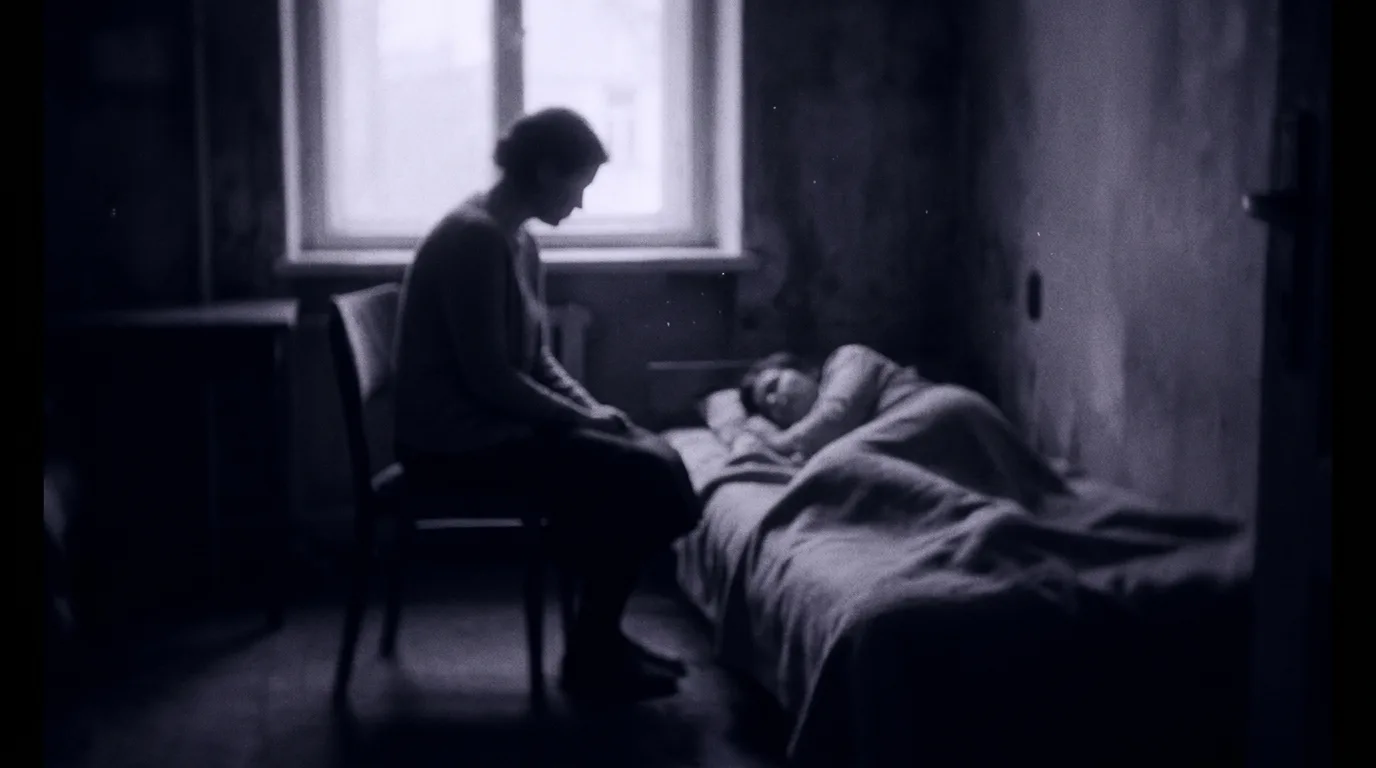
For friends, family, carers & clinicians
A guide for those who want to help.
The people around someone with ME/CFS often want to help but don't know how. Some well-meaning things cause real harm. These sections are for anyone who wants to understand the difference — and do better.
01
What helps.
None of this is complicated. Most of it costs nothing. What it requires is letting go of the instinct to fix, to accelerate, or to measure progress on a timeline that isn't yours.
Believe them
If they say they can't, they can't. That's it.
Follow their lead
What they can do today has nothing to do with what they could do yesterday. A good day isn't a turning point, and a bad day isn't a failure. Let them set the pace — for visits, messages, and how much of the friendship they can carry right now.
Make help concrete
'Let me know if you need anything' places the labour of asking back on the person who is already exhausted. Offer something specific and time-bound instead: 'I'll drop food Thursday, no need to reply.' Even better: help with the life admin that quietly piles up — emails, phone calls, forms — things that cost cognition they may not have.
Show up over time
Send messages they don't need to reply to. Keep initiating. Most people stop after a few months of not hearing back, and that's when the isolation really sets in.
Adjust how you're present
Softer voice. Less movement. No strong scents. Silence is fine — not every gap needs filling. And when they stop before they seem tired, that's pacing. Trust it.
02
What causes harm.
Most of these come from care and good intention. That is exactly why they're worth naming — the harm persists because it arrives wrapped in kindness, and the person receiving it often doesn't have the energy to correct it.
Encouraging effort
This is the most important one to understand. 'Push through', 'exercise more', 'try to stay positive' — these are not just unhelpful for ME/CFS, they can cause real, lasting deterioration. Post-exertional malaise means exertion beyond a person's threshold triggers a physiological crash that can last days, weeks, or longer. The instinct to encourage more is the wrong instinct here.
Pressure
Frustration at cancellations. Expecting them to initiate. Requiring justification for limits. Any of these places a demand on energy they don't have.
Unsolicited solutions
'Have you tried...?' They have. In almost every case, they have spent more time researching their own condition than you have, out of pure necessity. What the question actually communicates — however unintentionally — is that their illness is a problem they haven't yet tried hard enough to fix.
Minimising
'At least you can still...' 'You look well.' 'I get tired too.' Each of these requires the person to either spend energy correcting you or stay silent and absorb it.
Disappearing
People with long-term illness lose a great many friends — not through any falling out, but through the quiet arithmetic of who had the energy to maintain contact. Fading when things don't improve on a timeline you expected is one of the most common and painful things that happens to people with ME/CFS. They notice.
03
How to talk.
Conversation with someone who has ME/CFS requires a different quality of attention. Less filling, more listening. Less trying to fix, more staying in it together. The goal isn't to say the right thing — it's to make them feel less alone.
Ask before you offer
'Do you want to talk through it, or do you just want company?' is a better opening than arriving with solutions. Let them tell you what the conversation needs to be.
Ask about today
'How is today?' is a different question from 'are you any better?' One meets them where they are. The other asks them to measure themselves against a recovery that may not be coming — and to report on it. Don't open with 'you look well' either; looking well and feeling well are often completely unrelated, and the comment lands as invalidating even when it isn't meant that way.
Use their language
Crash. Flare. PEM. Baseline. These aren't dramatic — they're precise. Use the words they use for their own experience.
Don't fill the silence
Not every pause needs something put in it. Shorter conversations are fine. They'll tell you when they have more.
Let grief be grief
Ask what they miss. Let them name the losses — the career, the friendships, the plans, the version of themselves that existed before — without steering it toward silver linings or hope. The instinct to comfort is understandable, but redirecting someone's grief tends to communicate that their grief is a problem to be solved. Sometimes the most useful thing you can say is 'that is a real loss' and mean it.
Say this
- “How is today?”
- “No need to reply — just thinking of you.”
- “That’s a real loss. I’m sorry.”
- “What would actually help right now?”
Not this
- “Are you any better yet?”
- “You look so well!”
- “Just stay positive.”
- “Have you tried…?”
04
Making plans.
Plans with someone who has ME/CFS work best when cancellation is designed in from the start — not treated as a failure that needs apologising for. The friendship survives not by lowering expectations, but by changing the shape of them.
Build cancellation in
Make the plan so low-stakes that saying yes feels safe and saying no doesn't feel like a loss. 'Let's plan for this, knowing it might not happen' is a completely different proposition than a firm commitment — and for someone with ME/CFS, it's often the difference between accepting an invitation and not being able to.
Change the activity
Voice notes. A slow walk. Watching the same film from different sofas. Letters. A shared playlist sent with no expectation of a reply. These aren't lesser versions of connection — they're just connection in a shape that fits.
When it falls through
'That's okay — I'm glad you knew your limits.' Not 'maybe next time', not 'I hope you feel better soon'. Just: it's okay.
Keep initiating
The friendship will not maintain itself, because the energy required to maintain it isn't evenly distributed. If you only reach out when you haven't heard from them in a while, you're already waiting too long. Their silence isn't indifference — it's capacity. Be the one who acts.
Know someone who doesn't understand ME/CFS?
A new wave
ME/CFS and Long COVID
Since 2020, millions of people developed ME/CFS-like illness following COVID-19. Long COVID and ME/CFS share the same core symptoms — post-exertional malaise, cognitive dysfunction, unrefreshing sleep, and autonomic dysregulation.
Over 85% of Long COVID patients in large studies report PEM — the hallmark symptom that defines ME/CFS. Many Long COVID researchers and patients now recognise the two conditions as likely sharing a biological mechanism.
The NIH has committed over $1 billion to Long COVID research through the RECOVER initiative — and ME/CFS is explicitly part of that mandate. For the first time, ME/CFS research may receive funding proportional to its impact.
Scale of the problem